Building a personal brand once required considerable time, professional design skills, and a marketing budget. Today, artificial intelligence can make many parts of the process easier for beginners.
Whether you’re a student, freelancer, job seeker, content creator, or small-business owner, learning how to build a personal brand using AI can help you communicate your skills, share useful content, and develop a recognizable online presence.
AI tools can assist with writing, research, graphic design, video editing, content planning, and communication. However, a successful personal brand still depends on your genuine experience, values, and the trust you build with your audience.
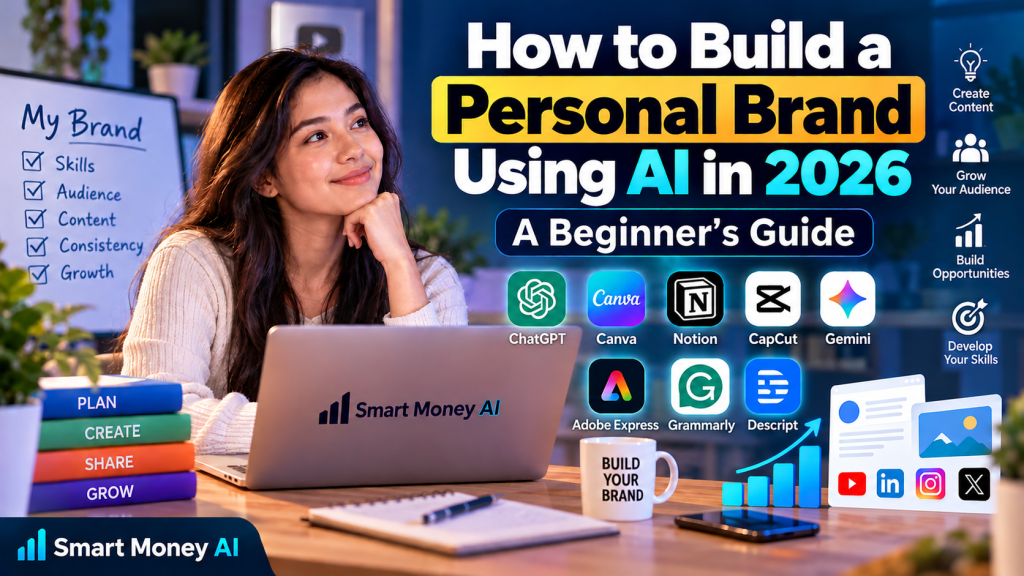
In this guide, you’ll learn 15 practical steps to develop your personal brand, discover eight useful AI tools, and follow a simple 30-day branding plan.
Table of Contents
What Is a Personal Brand?
A personal brand is the way people recognize and understand your professional identity, skills, expertise, values, and work.
Your personal brand may include:
- The topics you regularly discuss.
- The skills and knowledge you share.
- Your communication style.
- Your online profiles and website.
- The quality of your work and interactions.
- The reputation you develop over time.
For example, a freelance graphic designer might build a personal brand around simple, affordable designs for small businesses.
A student interested in technology might share beginner-friendly explanations of useful digital tools.
You don’t need to be famous or have thousands of followers to develop a personal brand. You need a clear purpose and a consistent way of communicating it.
Why Build a Personal Brand Using AI in 2026?
AI can support personal branding by helping you organize ideas, draft content, explore visual styles, and maintain a manageable publishing routine.
Some practical benefits include:
- Faster brainstorming: Generate content ideas based on your expertise.
- Writing assistance: Create first drafts of biographies, captions, and articles.
- Visual design support: Develop layouts, presentations, and graphics.
- Content planning: Organize topics into a weekly or monthly schedule.
- Consistency: Maintain a recognizable style across different platforms.
- Skill development: Learn basic marketing, communication, and design techniques.
AI can save time, but it cannot replace authentic expertise or real relationships. Use it as an assistant rather than a substitute for your identity.
Step 1: Identify Your Skills, Interests, and Goals
Before choosing AI tools, decide what you want your personal brand to represent.
Ask yourself:
- What subjects do I understand or want to learn?
- What useful information can I share?
- Who would benefit from my content?
- What makes my perspective different?
- What do I want to achieve over the next six months?
You might want to build a professional portfolio, find freelance opportunities, develop an educational blog, or demonstrate your knowledge to potential employers.
AI prompt example:
“Help me identify three possible personal branding topics based on my interests in technology, writing, and digital skills. Explain the target audience and content opportunities for each topic.”
Review the suggestions and select a direction that genuinely fits your interests.
Step 2: Choose a Clear Personal Branding Niche
A niche is the main subject or audience your personal brand focuses on.
Some examples include:
- AI tools for beginners.
- Digital marketing for small businesses.
- Career development and professional skills.
- Graphic design and creative workflows.
- Productivity and organization.
- Educational technology.
Choosing a niche can make your content easier for the right audience to recognize.
However, avoid selecting a topic solely because it appears popular. A sustainable personal brand should reflect knowledge or interests you can develop over time.
AI prompt example:
“Suggest five focused personal branding niches for someone interested in AI and digital skills. For each niche, describe the audience, common problems, and potential content topics.”
Step 3: Define Your Target Audience
A personal brand becomes more useful when you understand the people you want to reach.
Consider their experience level, common questions, professional or educational goals, preferred content formats, and challenges.
For example, if you want to help American small-business owners understand AI, your content might focus on simple productivity tools, customer communication, and practical marketing workflows.
If your audience is beginners, avoid unnecessary technical jargon.
AI prompt example:
“Create a simple audience profile for a personal brand that teaches AI tools to beginners in the United States. Include common questions, learning goals, and suitable content formats.”
Treat AI-generated audience profiles as hypotheses. Validate them through real conversations, feedback, and audience research.
Step 4: Create Your Personal Brand Identity
Your brand identity includes the visual and verbal elements that make your work recognizable.
These may include:
- Your name or professional brand name.
- A short tagline.
- A consistent color palette.
- Readable fonts.
- A profile photo or logo.
- Your preferred writing style.
- A clear description of what you offer.
For example, a personal brand focused on digital skills might use a clean blue-and-white design with simple graphics and an educational tone.
Tools such as Canva and Adobe Express can help create visual materials. Some features may require paid plans.
AI prompt example:
“Suggest a professional visual identity for a beginner-friendly personal brand about AI education. Recommend three complementary colors, two typography styles, and a short tagline.”
Use AI suggestions as inspiration, then refine them to create an identity that represents you.
Step 5: Write a Professional Bio Using AI
Your biography should explain who you are, what you do, and who you help.
A useful structure is:
Who you are + What you do + Who you help + Your purpose
For example:
“I’m a digital skills educator sharing practical AI tutorials and productivity tips to help beginners use technology with confidence.”
You can adapt your bio for LinkedIn, a personal website, or social media profiles.
AI prompt example:
“Write three professional bio options for a beginner content creator who teaches practical AI tools and digital skills. Keep each version under 80 words and use a friendly, credible tone.”
Only include qualifications, achievements, or experience you actually have.
Step 6: Choose the Right Platforms
You don’t need to maintain accounts on every social media platform.
Start with one or two platforms that suit your goals and content.
| Platform | Potential Personal Branding Use |
|---|---|
| Professional networking, career updates, industry insights | |
| YouTube | Tutorials, demonstrations, educational videos |
| Visual storytelling, short educational content | |
| Personal website | Portfolio, articles, resources, contact information |
| Newsletter | Sharing updates with people who choose to subscribe |
For example, someone building a professional reputation in digital marketing might prioritize LinkedIn and a personal website.
A creator teaching software tutorials might focus on YouTube and a supporting blog.
Choose platforms based on your audience rather than trying to publish everywhere.
Step 7: Use AI to Generate Content Ideas
One of the biggest challenges in personal branding is deciding what to publish consistently.
AI can help generate topic ideas based on your niche and audience.
If your personal brand focuses on AI education, possible topics include:
- Beginner-friendly AI tool tutorials.
- Common mistakes when using AI.
- Practical productivity workflows.
- Comparisons of popular AI applications.
- Lessons learned while developing digital skills.
AI prompt example:
“Generate 20 educational content ideas for a beginner-friendly personal brand focused on AI tools. Group the ideas into tutorials, common questions, productivity tips, and practical examples.”
Choose ideas that you can explain accurately and add your own perspective to.
For more inspiration, explore our guide to the best AI tools for beginners.
Step 8: Create Helpful Content With 8 AI Tools
Creating useful, consistent content is one of the most important parts of personal branding. The right AI tools can help you brainstorm ideas, write drafts, design graphics, edit videos, improve audio, and organize your work.
Here are eight tools beginners can explore when learning how to build a personal brand using AI.
1. ChatGPT — Writing, Ideas, and Content Planning
ChatGPT is an AI assistant that can help you brainstorm topics, organize ideas, draft content, and improve written communication.
How it helps your personal brand:
- Generate blog and social media content ideas.
- Draft professional biographies and introductions.
- Create outlines for articles and videos.
- Suggest clearer headlines and captions.
- Review content for readability and structure.
Example prompt:
“Create five educational LinkedIn post ideas for a beginner who shares practical AI productivity tips. Include a clear topic, a short outline, and one question for readers.”
Best for: Writing assistance, brainstorming, content planning, and learning.
Official website: https://chatgpt.com/
2. Canva — Graphics and Visual Branding
Canva is a visual design platform that provides templates and AI-assisted creative features.
It can help beginners create professional-looking graphics without advanced design experience.
How it helps your personal brand:
- Design social media graphics.
- Create YouTube thumbnails.
- Develop a consistent color palette.
- Prepare presentations and visual guides.
- Create branded banners and profile materials.
Example use:
Create three Instagram graphics using the same colors, fonts, and logo to establish a consistent visual identity.
Best for: Social media design, thumbnails, presentations, and brand graphics.
Official website: https://www.canva.com/
3. Notion — Content Organization and Planning
Notion is a workspace for organizing notes, documents, tasks, and databases. Available AI features can assist with writing and organizing information, depending on the plan.
How it helps your personal brand:
- Maintain a content calendar.
- Store article and video ideas.
- Organize research notes.
- Track publishing progress.
- Plan weekly branding activities.
Example use:
Create a content database with columns for topic, platform, draft status, publishing date, and performance notes.
Best for: Planning, project management, and organizing content.
Official website: https://www.notion.com/
4. CapCut — Video Editing and Short-Form Content
CapCut is a video editing platform with tools for creating social media videos and other digital content. AI-assisted features vary by product version and availability.
How it helps your personal brand:
- Edit educational short videos.
- Add captions and transitions.
- Combine video clips and graphics.
- Improve the presentation of tutorials.
- Prepare videos for different platforms.
Example use:
Turn a short explanation of a productivity tip into a 30-second educational video with clear captions and branded colors.
Best for: Video editing, short-form educational content, and social media videos.
Official website: https://www.capcut.com/
5. Google Gemini — Research Support and Idea Development
Google Gemini is an AI assistant that can help with brainstorming, writing, explanations, and organizing information.
It can be useful when exploring new topics or developing ideas for educational content.
How it helps your personal brand:
- Brainstorm educational topics.
- Generate alternative article outlines.
- Simplify difficult concepts.
- Compare different content approaches.
- Organize questions for further research.
Example prompt:
“Suggest ten beginner-friendly video topics about digital marketing for small businesses. For each topic, include the main question the video should answer.”
Best for: Brainstorming, learning, explanations, and research assistance.
Important: Verify factual claims using reliable sources rather than treating AI-generated responses as confirmed research.
Official website: https://gemini.google.com/
6. Adobe Express — Professional Graphics and Branded Content
Adobe Express is a design and content creation platform that offers templates, editing tools, and AI-assisted features.
It can help you create branded content for websites and social media.
How it helps your personal brand:
- Create promotional graphics.
- Design branded social media posts.
- Prepare presentations and banners.
- Edit images for digital content.
- Maintain a recognizable visual style.
Example use:
Create a branded educational graphic using your personal brand’s colors, logo, and typography.
Best for: Visual branding, digital graphics, and promotional content.
Official website: https://www.adobe.com/express/
7. Grammarly — Clear and Professional Writing
Grammarly is a writing assistance platform that helps review grammar, spelling, clarity, and tone.
Clear communication is important when building a professional reputation online.
How it helps your personal brand:
- Improve blog post readability.
- Review professional emails.
- Identify grammar and spelling mistakes.
- Refine social media captions.
- Maintain a consistent writing style.
Example use:
Review a LinkedIn post before publishing to identify awkward wording, unclear sentences, and grammar mistakes.
Best for: Editing, proofreading, and professional communication.
Official website: https://www.grammarly.com/
8. Descript — Audio and Video Content Editing
Descript is an audio and video editing platform that includes transcription-based editing and AI-assisted production features.
It can help content creators edit spoken content using a text-based workflow.
How it helps your personal brand:
- Edit interviews and educational videos.
- Create transcripts from recordings.
- Remove unnecessary sections from spoken content.
- Prepare podcast and video clips.
- Add captions to improve accessibility.
Example use:
Record a five-minute educational explanation, generate a transcript, and edit the recording by reviewing the text.
Best for: Podcasts, interviews, voice-based tutorials, and video editing.
Official website: https://www.descript.com/
Comparison of 8 AI Tools for Personal Branding
| AI Tool | Main Purpose | Best Personal Branding Use |
|---|---|---|
| ChatGPT | Writing and brainstorming | Articles, captions, content ideas |
| Canva | Visual design | Social media graphics and thumbnails |
| Notion | Organization | Content calendars and planning |
| CapCut | Video editing | Short videos and tutorials |
| Google Gemini | AI assistance | Research support and topic development |
| Adobe Express | Graphic design | Branded visual content |
| Grammarly | Writing improvement | Editing and proofreading |
| Descript | Audio/video editing | Podcasts, interviews, and tutorials |
Which AI tools should beginners start with?
You don’t need all eight tools immediately.
A practical starting combination is ChatGPT or Gemini for writing and ideas, Canva or Adobe Express for visual design, and Notion for planning.
If you regularly create videos, consider CapCut or Descript based on your editing needs.
Grammarly can help improve written communication across platforms.
Choose tools that solve real problems in your workflow. Free features, subscription costs, and availability may change over time.
Step 9: Develop a Consistent Content Strategy
Consistency makes your personal brand easier to recognize.
However, publishing frequently is less important than sharing useful content you can sustain.
A simple weekly plan might look like this:
| Day | Activity |
|---|---|
| Monday | Research one audience question |
| Tuesday | Create an educational post |
| Wednesday | Share a practical tip |
| Thursday | Respond to comments and feedback |
| Friday | Publish a tutorial or example |
| Saturday | Review results and improve older content |
| Sunday | Plan the following week |
Adjust this schedule to fit your available time.
If you’re managing several responsibilities, two high-quality posts per week may be more realistic than daily publishing.
AI can assist with planning, but your schedule should remain flexible.
Step 10: Create a Personal Website or Portfolio
A personal website gives you a central place to organize your work.
Depending on your goals, it might include:
- A homepage explaining what you do.
- An About page describing your background.
- A portfolio showing completed projects.
- A blog with useful articles.
- A contact page.
- Links to your professional social profiles.
A website can also help visitors learn about your expertise without depending entirely on a social media platform.
WordPress is one option for creating a website, and many themes provide customizable layouts.
Keep your design simple, mobile-friendly, and easy to navigate.
Step 11: Build Trust Through Authentic Content
A recognizable visual identity can attract attention, but trust is built through your actions.
To develop credibility:
- Share accurate, useful information.
- Explain what you know and what you’re still learning.
- Correct mistakes when necessary.
- Avoid exaggerated claims.
- Credit sources appropriately.
- Clearly disclose sponsorships and affiliate relationships.
- Respect privacy and avoid publishing confidential information.
Do not invent testimonials, credentials, client results, or personal experiences using AI.
If you use realistic AI-generated images or videos, avoid presenting fabricated people or events as genuine evidence.
Your reputation is more valuable than short-term engagement.
Step 12: Use AI to Improve Productivity
Managing a personal brand involves research, writing, design, scheduling, and communication.
AI can help organize these activities.
For example, you might ask an AI assistant to:
- Turn a list of ideas into a weekly content plan.
- Summarize your own meeting notes.
- Suggest clearer headings for a blog article.
- Create a checklist for publishing a video.
- Identify repetitive wording in a draft.
You can explore additional workflows in our guide on how to use AI tools to improve productivity.
Remember to review outputs carefully and avoid entering private or confidential information into tools without appropriate safeguards.
Step 13: Engage With Your Audience
Personal branding is not only about publishing content. It also involves listening.
You can learn about your audience by:
- Responding thoughtfully to comments.
- Asking what topics people want explained.
- Reading questions from your professional community.
- Noticing which tutorials people find useful.
- Improving content based on feedback.
AI can help organize feedback themes, but genuine interactions should remain personal and respectful.
Avoid automated spam comments or artificial engagement.
Step 14: Measure Your Progress
A personal brand develops gradually.
Rather than focusing only on follower counts, track indicators that reflect your goals.
Useful measures may include:
- Website visits from relevant audiences.
- Engagement with educational content.
- Newsletter subscriptions.
- Portfolio inquiries.
- Returning readers or viewers.
- Meaningful professional connections.
For a website, Google Search Console can provide information about search impressions, clicks, and queries.
Analytics can help you understand which content people find useful, but small datasets should not be overinterpreted.
Review your progress monthly and adjust your strategy based on reliable patterns.
Step 15: Keep Learning and Improving Your Skills
AI tools and digital platforms continue to change.
Developing your personal brand therefore involves ongoing learning.
You can improve your knowledge of:
- Writing and communication.
- Graphic design.
- Digital marketing.
- Video editing.
- Search engine optimization.
- AI prompting.
- Audience research.
- Basic website management.
For a structured starting point, read our guide to essential digital skills for beginners.
The more useful skills you develop, the more meaningful information you can share with your audience.
A 30-Day Personal Branding Plan Using AI
If you’re starting from scratch, use this simple roadmap.
Week 1: Define Your Brand
- Identify your skills and interests.
- Choose a focused niche.
- Define your target audience.
- Write a short professional biography.
- Select your brand colors and visual style.
Week 2: Build Your Online Presence
- Set up one or two relevant profiles.
- Create a consistent profile image or logo.
- Write clear profile descriptions.
- Prepare a simple portfolio or website outline.
- Organize your content ideas.
Week 3: Publish Useful Content
- Create your first educational posts.
- Share a practical example or tutorial.
- Use AI to improve clarity and structure.
- Review every draft before publishing.
- Respond to audience questions.
Week 4: Review and Improve
- Identify which topics generated useful feedback.
- Update your profile descriptions if needed.
- Improve your content planning process.
- Create a realistic schedule for the next month.
- Set one measurable goal for continued progress.
This plan is flexible. Building a credible personal brand often takes much longer than 30 days.
Common Personal Branding Mistakes to Avoid
Trying to Appeal to Everyone
A broad message can make it difficult for visitors to understand your expertise.
Start with a focused audience and expand gradually.
Copying Other Creators
Learning from successful creators is useful, but copying their identity or content can damage your credibility.
Develop your own perspective and examples.
Publishing Unreviewed AI Content
AI-generated drafts may contain errors, repetition, or unsupported claims.
Edit your work before publishing.
Changing Your Brand Identity Too Frequently
Frequent changes in style or messaging can confuse your audience.
Maintain a consistent foundation while allowing gradual improvements.
Expecting Immediate Results
A personal brand rarely produces significant opportunities overnight.
Focus on building skills, publishing useful information, and earning trust over time.
Frequently Asked Questions
Can beginners build a personal brand using AI?
Yes. Beginners can use AI tools to brainstorm ideas, draft biographies, create visual content, and organize publishing schedules. Authenticity and accuracy remain essential.
What are the best AI tools for personal branding?
Useful options include ChatGPT, Canva, Notion, CapCut, Google Gemini, Adobe Express, Grammarly, and Descript. The right combination depends on whether you focus on writing, graphics, video, or organization.
Do I need a website for personal branding?
A website is not mandatory, but it can provide a central location for your portfolio, articles, professional information, and contact details.
How long does it take to build a personal brand?
There is no fixed timeline. Results depend on your niche, experience, content quality, consistency, and audience engagement.
Can AI create all my personal branding content?
AI can assist with drafting and production, but you should contribute your own knowledge, examples, opinions, and judgment. Review every piece of content before publishing.
Is personal branding the same as becoming an influencer?
No. Personal branding focuses on how people understand your identity and expertise. It can support career development, professional networking, education, or creative work without requiring a large social media following.
A professional portfolio is an important part of building your personal brand. If you want to showcase your skills and projects, read our step-by-step guide on how to create a portfolio using AI.
Conclusion
Learning how to build a personal brand using AI can help beginners develop a clearer professional identity and share useful information more efficiently.
Start by identifying your skills, choosing an audience, and creating a consistent brand identity. Use AI tools such as ChatGPT, Gemini, Canva, Notion, CapCut, Adobe Express, Grammarly, and Descript to support your writing, design, research, video production, and planning.
Remember that AI is an assistant, not a replacement for your personal experience and judgment.
Over time, a thoughtful personal brand can help people recognize your work, understand your expertise, and discover opportunities to connect or collaborate.
The best personal brand isn’t created by AI alone. It’s built through your skills, your perspective, and the trust you earn.
Explore more practical guides on AI tools and digital skills at Smart Money AI.