
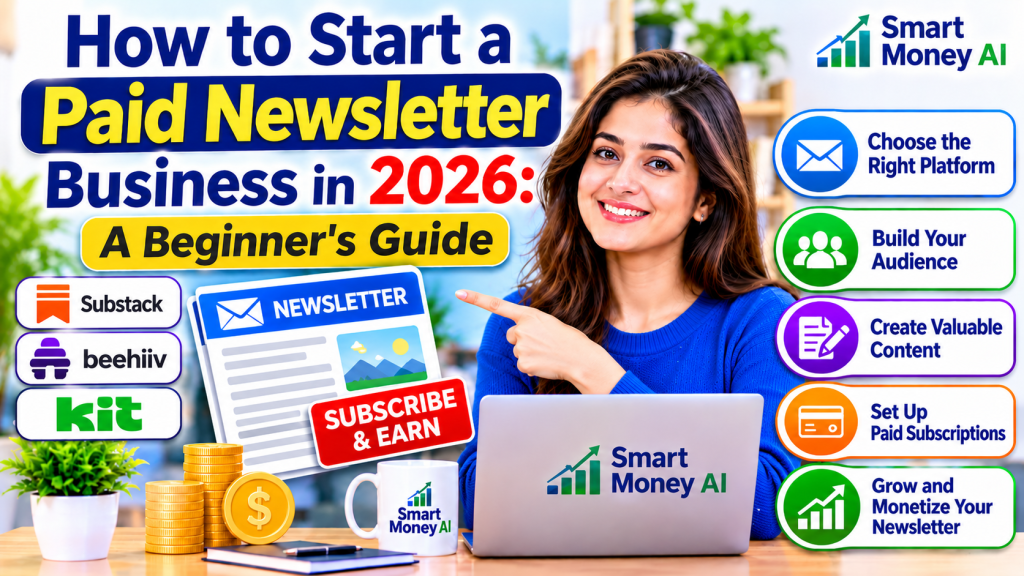
Starting an online business does not always require creating a complicated website, developing a software product, or managing physical inventory. One business model that beginners can explore is a paid newsletter.
A newsletter is a regularly delivered email containing useful information, insights, advice, updates, or educational content. While many newsletters are free, a paid newsletter charges subscribers for access to premium articles, research, tutorials, recommendations, or other exclusive material.
For example, a person with experience in personal finance could publish a weekly newsletter explaining budgeting techniques, saving strategies, and financial concepts. A technology enthusiast could publish updates about useful software and emerging digital tools. A career specialist could share job-search advice, interview preparation tips, and professional development resources.
The opportunity is straightforward: identify a specific audience, create content that solves a real problem, build an email subscriber base, and offer a paid subscription to readers who want more.
However, starting a paid newsletter is not as simple as sending a few emails and expecting people to pay. You need a clear topic, a reliable publishing schedule, useful content, an audience-building strategy, and a reason for readers to subscribe.
In this guide, you will learn how to start a paid newsletter business in 2026, choose a profitable niche, select a platform, attract subscribers, set prices, and build a sustainable publishing routine.
Table of Contents
What Is a Paid Newsletter Business?
A paid newsletter business is an online publishing business in which readers pay a subscription fee to receive exclusive email content.
The creator publishes information regularly and delivers it directly to subscribers’ inboxes. Depending on the business model, readers may pay monthly, annually, or through another subscription arrangement.
A paid newsletter can cover many subjects, including:
- Personal finance education
- Technology and AI developments
- Career advice and professional skills
- Business and entrepreneurship
- Health and fitness education
- Travel planning and destination guides
- Industry news and research
- Hobbies and specialist interests
- Productivity and personal development
The important factor is not simply choosing a popular subject. Your newsletter should serve a clearly defined audience and provide information that readers find useful enough to pay for.
For example, a general newsletter about technology may compete with thousands of free websites. A focused newsletter explaining practical AI tools for independent business owners may offer a more specific benefit.
The more clearly you understand your audience, the easier it becomes to decide what to publish.
Why Start a Paid Newsletter Business in 2026?
A newsletter business can be attractive because it does not require physical products or a large inventory. You can create content using a computer, an internet connection, and a suitable publishing platform.
Here are some potential advantages.
1. Relatively Low Startup Costs
You can begin with a basic newsletter platform and a simple content plan. Some services offer free entry-level plans, although features, subscriber limits, transaction fees, and paid-subscription options vary.
You do not necessarily need to purchase expensive software or hire a team when starting.
2. Direct Communication With Your Audience
Unlike social media posts that depend on platform algorithms and changing distribution rules, newsletters give you a direct communication channel with subscribers.
You can send useful information to people who have chosen to receive your emails.
However, email delivery is not guaranteed. Messages may go to spam folders, and subscriber engagement depends on the quality and relevance of your content.
3. Recurring Subscription Revenue
A paid newsletter can generate recurring revenue when subscribers renew their memberships.
For example, a newsletter charging $8 per month with 100 active paying subscribers would generate $800 in gross monthly subscription revenue before platform fees, payment processing costs, taxes, refunds, and other expenses.
This is a simple illustration, not a promise of earnings. Building and retaining paying subscribers takes time.
4. Flexible Working Arrangements
You can write and schedule newsletters from almost anywhere with an internet connection.
This flexibility can be useful for freelancers, professionals, students, and people building an online business alongside other responsibilities.
5. Opportunities to Expand
Once your newsletter develops an audience, you may be able to introduce additional products and services.
These could include:
- Downloadable guides
- Premium reports
- Online courses
- Workshops
- Templates
- Consulting services
- Sponsored placements
These additional revenue sources should support the newsletter rather than distract from its main purpose.
10 Steps to Start a Paid Newsletter Business
1. Choose a Specific Newsletter Niche
Your niche is the subject area and audience your newsletter serves.
Choosing a specific niche is one of the most important decisions you will make. A newsletter that tries to cover everything may struggle to give readers a clear reason to subscribe.
Instead of writing about general business news, consider focusing on small-business marketing strategies. Instead of covering all technology topics, you could explain practical AI tools for freelancers.
Some possible newsletter niches include:
Personal finance education: Explain budgeting, saving, debt management concepts, and financial planning basics. Avoid presenting yourself as a qualified financial adviser if you do not have the necessary credentials.
AI tools and technology: Share practical tutorials, software comparisons, productivity tips, and developments that matter to a particular audience.
Career development: Provide job-search advice, interview preparation, resume guidance, and workplace skills.
Small-business education: Explain customer acquisition, marketing, business operations, and useful digital tools.
Travel planning: Publish destination guides, travel preparation advice, itinerary ideas, and practical travel information.
Professional skills: Teach readers useful skills such as spreadsheets, presentation design, project management, and digital communication.
Before choosing a niche, ask yourself:
- Do I understand this subject well enough to create useful content?
- Is there a clearly identifiable audience?
- Do people actively look for information about this topic?
- Can I publish new and useful material regularly?
- Would readers have a reason to pay for more detailed information?
You should also examine competing newsletters, blogs, online communities, and search results. Competition is not automatically a reason to avoid a niche. It can indicate that an audience already exists.
Your goal is to find a specific angle that makes your newsletter different.
2. Identify Your Target Audience
Once you choose a niche, define exactly who you want to reach.
A newsletter for everyone is difficult to position. A newsletter for a particular group can address specific problems and provide more relevant information.
For example, consider these two descriptions:
- A newsletter about productivity.
- A weekly newsletter helping busy freelancers organize their work, manage deadlines, and use digital tools more effectively.
The second description makes the intended audience and benefit much clearer.
Create a simple audience profile.
| Question | Example |
|---|---|
| Who is the reader? | Independent freelancers |
| What is their problem? | Difficulty managing projects and deadlines |
| What do they want? | A more organized working routine |
| What content helps them? | Templates, tutorials, and practical workflows |
| Why might they pay? | To receive detailed guidance and ready-to-use resources |
You do not need complicated market research software to begin. You can learn about your audience by reviewing relevant discussions, reading comments on specialist websites, observing common questions, and talking to potential readers.
Avoid assuming that people will pay simply because they like a topic. You need evidence that your newsletter solves a problem they care about.
3. Decide What Your Newsletter Will Offer
Before creating a subscription, decide what readers will receive.
A paid newsletter should offer a clear benefit beyond what subscribers can easily find in general free content.
For example, a free technology newsletter might share important AI news and useful links. Its paid version could provide detailed tool comparisons, step-by-step tutorials, practical workflows, and monthly research summaries.
Possible paid content includes:
- Detailed educational articles
- Exclusive industry research
- Step-by-step tutorials
- Expert interviews
- Downloadable templates
- Case studies
- Curated resources
- Monthly reports
- Practical checklists
- Subscriber-only discussions
Avoid promising too much.
If you advertise daily premium content but can realistically publish only once a week, you are creating an expectation that will be difficult to maintain.
Start with a manageable publishing schedule and improve it as your audience grows.
4. Choose a Newsletter Publishing Platform
You need a platform to collect email subscribers, publish newsletters, manage subscriptions, and deliver content.
Several services provide tools for newsletter creators.
Substack
<text><escape>Substack</escape></text> is a publishing platform that allows creators to publish newsletters and offer paid subscriptions.
It combines email publishing with a web-based publication and provides tools for managing free and paid readers.
It can be useful for writers who want to start publishing without building a complicated website.
Official website: https://substack.com/
For step-by-step instructions on enabling paid subscriptions and setting monthly or annual prices, read the official Substack guide to setting up a paid publication.
beehiiv
<text><escape>beehiiv</escape></text> is a newsletter publishing platform with features designed for creators who want to grow and monetize an email audience.
Depending on the plan, features may include subscriber management, email automation, analytics, and monetization options.
It may be suitable for creators who want more dedicated newsletter growth and publishing tools.
Official website: https://www.beehiiv.com/
For instructions on creating paid subscription levels, setting prices, and defining subscriber benefits, read the official beehiiv guide to paid subscription tiers.
Kit
<text><escape>Kit</escape></text>, formerly known as ConvertKit, provides email marketing tools for creators.
It offers features for managing subscribers, creating email sequences, and building automated email workflows. Available newsletter and monetization features depend on the current plan.
It can be useful for creators who want to combine email marketing with digital products and other offerings.
Official website: https://kit.com/
Kit also offers a Creator Network that allows newsletter creators to recommend one another and help grow their email audiences.
Quick Platform Comparison
| Platform | Main purpose | Suitable for |
|---|---|---|
| Substack | Newsletter publishing and paid subscriptions | Independent writers and publishers |
| beehiiv | Newsletter publishing and audience growth | Newsletter-focused businesses |
| Kit | Email marketing and creator workflows | Creators with multiple digital offerings |
Before choosing, compare current pricing, paid-subscription fees, payment processing, subscriber limits, export options, analytics, and available integrations.
Do not select a platform only because it advertises a free plan. Make sure it supports the business model you intend to use.
5. Create Your Newsletter Brand
Your newsletter needs a recognizable identity.
A clear name and description help potential readers understand what you publish.
For example, a newsletter about practical technology for small businesses could use a name that communicates its subject and audience.
Consider these branding elements:
Newsletter name: Choose something easy to remember, spell, and pronounce.
Description: Explain what readers will receive and how often.
Logo: Use a simple design that remains recognizable at small sizes.
Colors and typography: Select a consistent visual style for your emails and publication page.
Author introduction: Tell readers who creates the newsletter and why you cover the subject.
You do not need a complicated brand identity at the beginning. Clarity and consistency are more important than elaborate design.
Also check that your chosen newsletter name does not conflict with an existing brand or business.
6. Set Up Your Newsletter and Subscription Options
After selecting a platform, create your publication and configure the basic settings.
A typical setup involves:
- Create an account on the selected platform.
- Choose your newsletter name.
- Write a short description.
- Upload a logo or suitable profile image.
- Set your sender name and email details.
- Create a subscription page.
- Configure free and paid subscription options.
- Connect the required payment service.
- Review the confirmation and welcome emails.
- Send a test newsletter before launching.
Your subscription page should explain what subscribers receive.
For example:
Free subscription
- One weekly newsletter
- Selected educational articles
- Useful resources and updates
Paid subscription
- Full premium articles
- Detailed tutorials
- Exclusive monthly reports
- Downloadable resources
Only advertise benefits you can consistently deliver.
Test the complete subscription process before inviting readers. Check the sign-up page, confirmation email, payment process, welcome message, and unsubscribe option.
7. Set a Reasonable Subscription Price
Pricing affects both subscriber decisions and your business revenue.
If the price is too high for the value offered, readers may hesitate to subscribe. If it is too low, you may not generate enough revenue to justify the time required to create premium content.
For a new newsletter, you could test a simple pricing structure.
| Subscription | Illustrative price |
|---|---|
| Free | $0 |
| Monthly premium | $5 |
| Higher-value monthly plan | $10 |
| Annual premium | $50–$100 |
These are example prices for planning, not universal recommendations. The appropriate price depends on your niche, audience, content quality, publishing frequency, and competing offers.
For example, a newsletter that provides general weekly tips may need a lower price than a specialist publication offering original research and detailed industry analysis.
Start with a price that matches the value you can realistically provide.
You can adjust pricing later, but communicate changes clearly to existing subscribers.
8. Create High-Quality Newsletter Content
Content is the foundation of a paid newsletter business.
Readers will continue paying only if they believe the newsletter provides ongoing value.
A useful newsletter should be clear, well organized, accurate, and relevant to its audience.
For example, a weekly newsletter about digital skills could follow this structure:
Opening: Introduce the week’s topic and explain why it matters.
Main lesson: Provide a practical explanation with examples.
Action steps: Give readers something they can try.
Useful resources: Share relevant tools or learning materials.
Closing: Summarize the main lesson and preview the next edition.
Avoid filling newsletters with generic information that readers can find anywhere.
Add your own research, examples, experience, comparisons, or practical explanations.
If you use AI tools to help draft newsletters, review every important claim, verify facts, and edit the final content. Do not publish unverified AI-generated information or copy other publishers’ work.
A consistent publishing schedule also matters. Weekly publishing is a reasonable starting point for many beginners, but choose a frequency you can maintain.
9. Build Your Email Subscriber List
A paid newsletter cannot grow without readers.
Start by offering a free newsletter or sample edition. This gives potential subscribers an opportunity to understand your content before deciding whether to pay.
Here are practical ways to attract readers.
Publish useful free content: Share selected articles and practical advice on your website.
Use social media: Publish short insights, useful tips, and previews that direct interested readers to your newsletter sign-up page.
Create a free resource: Offer a checklist, template, short guide, or useful report in exchange for an email subscription.
Write guest articles: Contribute useful content to relevant websites and publications where your target audience already spends time.
Participate in relevant communities: Answer questions and share useful information without spamming groups with promotional links.
Use search engine optimization: Publish helpful articles that target questions your audience searches for.
Encourage referrals: Ask satisfied subscribers to recommend the newsletter to people who may find it useful.
Focus on attracting people who genuinely want your content. A large email list is not automatically valuable if most subscribers never open your messages or have no interest in the subject.
Do not purchase email lists. Build your audience through legitimate sign-ups and clear subscriber consent.
10. Measure Results and Improve Your Newsletter
A newsletter business needs regular evaluation.
Your platform may provide analytics that help you understand how readers interact with your emails.
Useful measurements include:
Subscriber growth: How many people are joining your newsletter?
Paid conversion rate: What proportion of free subscribers become paying customers?
Renewal rate: How many paid subscribers continue their subscriptions?
Unsubscribes: How many people leave your list?
Click activity: Which links and resources attract attention?
Revenue: How much subscription income remains after fees, refunds, and other costs?
Do not focus on a single metric.
For example, a newsletter may have a high open rate but very few paying subscribers. Another may have a smaller audience but a stronger paid subscription base.
Review results monthly and identify what is working.
Ask readers what they find useful, which topics they want covered, and what could be improved.
Use that feedback to make the newsletter more valuable.
Free vs. Paid Newsletter Content: What Should You Offer?
Many successful newsletter models use a combination of free and paid content.
Free content helps people discover your publication, while paid content provides additional value for subscribers.
The difference should be clear.
| Free newsletter | Paid newsletter |
|---|---|
| Short weekly updates | Detailed premium editions |
| Selected tips | Step-by-step tutorials |
| General educational content | In-depth specialist guidance |
| Useful public resources | Exclusive research and resources |
| Occasional announcements | Subscriber-only reports |
You do not need to hide every useful idea behind a payment.
Free content should be valuable enough to build trust. Paid content should provide a deeper benefit that makes subscribing worthwhile.
For example, a free edition could explain five common mistakes when using AI tools. The paid edition could provide detailed workflows, comparisons, practical templates, and implementation instructions.
This gives readers a reason to consider upgrading without making the free newsletter feel useless.
How Much Can a Paid Newsletter Business Earn?
A paid newsletter can generate recurring subscription revenue, but income depends on the number of paying subscribers, pricing, retention, and operating expenses.
Consider these simplified examples.
| Paying subscribers | Monthly price | Gross monthly revenue |
|---|---|---|
| 50 | $5 | $250 |
| 100 | $5 | $500 |
| 250 | $8 | $2,000 |
| 500 | $10 | $5,000 |
| 1,000 | $10 | $10,000 |
These figures are mathematical illustrations, not earnings forecasts.
They do not include:
- Payment processing fees
- Newsletter platform fees
- Refunds and chargebacks
- Taxes
- Advertising or promotion costs
- Software and operating expenses
- Time spent researching and writing
For example, 100 paying subscribers at $5 per month produce $500 in gross monthly revenue. Your actual amount received will be lower after applicable costs.
You should also account for cancellations. Subscription income can fluctuate when readers stop renewing.
The most useful goal for a beginner is not to chase a large revenue number immediately. Focus first on producing valuable content and attracting a small group of readers who genuinely want it.
Legal and Privacy Responsibilities for Newsletter Owners
Running a newsletter involves collecting and using email addresses. You should understand the rules that apply to your business and subscribers.
For a US-focused newsletter, the CAN-SPAM Act is an important starting point.
The Federal Trade Commission explains that commercial email must follow requirements that include truthful header information, non-deceptive subject lines, a valid physical postal address, and a clear way for recipients to opt out.
You must also honor valid unsubscribe requests within the legally required period.
Official FTC resource: https://www.ftc.gov/business-guidance/resources/can-spam-act-compliance-guide-business
Other important practices include:
- Explain what subscribers are signing up to receive.
- Collect only information you actually need.
- Protect subscriber information.
- Do not share or sell subscriber details without an appropriate legal basis and clear disclosure.
- Provide a working unsubscribe option.
- Review the privacy and email-marketing rules that apply to your audience and business location.
If you have subscribers outside the United States, additional privacy and marketing laws may apply. For example, European data protection and electronic marketing rules may affect how you collect and contact subscribers.
This is general educational information, not legal advice. Review the applicable requirements before launching.
Common Mistakes to Avoid When Starting a Paid Newsletter
1. Choosing a Topic Without Understanding the Audience
A subject may interest you, but that does not prove people will pay for it.
Research the audience and identify the problems your newsletter can solve.
2. Starting With Too Many Topics
A newsletter that covers unrelated subjects may confuse readers.
Begin with one clear niche and expand only when you have a strong reason.
3. Charging Before Building Trust
Asking people to pay for a newsletter they have never experienced can make subscriptions difficult to sell.
Offer useful free content and sample editions so readers can understand your approach.
4. Publishing Inconsistent Content
Subscribers expect the newsletter to arrive according to the schedule you advertise.
Choose a realistic publishing frequency and maintain it.
5. Copying Other Newsletters
Copying another publisher’s articles, research, or unique presentation can create copyright and reputational problems.
Study competitors to understand the market, but create original content and add your own value.
6. Relying Entirely on Social Media
Social media can help attract readers, but relying on one platform creates risk.
Build your own email subscriber base and maintain a website or publication page where people can discover your work.
7. Ignoring Subscriber Feedback
Readers may stop paying if the newsletter no longer meets their needs.
Ask for feedback, review engagement, and improve your content based on genuine reader interests.
8. Overpromising Results
Do not promise subscribers guaranteed income, investment returns, career success, or other outcomes you cannot control.
Describe exactly what your newsletter provides and set realistic expectations.
A Practical 30-Day Launch Plan for Beginners
You do not need to build the entire business in one day. A structured 30-day plan can help you move from an idea to a basic newsletter launch.
| Period | Main task | Expected result |
|---|---|---|
| Days 1–5 | Choose a niche and research readers | Clear audience and topic |
| Days 6–10 | Select a platform and create branding | Basic newsletter setup |
| Days 11–15 | Prepare sample editions | Initial content ready |
| Days 16–20 | Create a sign-up page and free offer | Subscriber collection system |
| Days 21–25 | Invite readers and publish free content | Early audience development |
| Days 26–30 | Review feedback and introduce paid offer | First monetization test |
Days 1–5: Research Your Niche
Choose one subject and identify a specific audience.
Review competing newsletters and websites. Write down at least 20 questions your potential readers want answered.
Use those questions to create your first content ideas.
Days 6–10: Set Up Your Platform
Compare newsletter platforms and select one that supports your requirements.
Create your newsletter name, description, logo, and subscription page.
Review the platform’s current fees and payment options before committing to a paid plan.
Days 11–15: Prepare Your First Editions
Write at least three useful sample newsletters.
Make sure they demonstrate the quality and style readers can expect.
Create one free edition and plan what additional value a paid edition would provide.
Days 16–20: Build Your Sign-Up Page
Explain the newsletter’s topic, intended audience, and publishing frequency.
Add a clear subscription form and review the welcome email.
Test the sign-up and unsubscribe processes.
Days 21–25: Start Attracting Readers
Publish useful free content on your website or social channels.
Invite people who are genuinely interested in the topic to subscribe.
Avoid adding people to your list without appropriate permission.
Days 26–30: Review and Improve
Check subscriber feedback and engagement.
Identify which topics attract the most interest.
If readers see value in the content, introduce a clearly explained paid subscription. Do not assume that everyone who joins the free list will become a paying customer.
Your first month should be treated as a learning and testing period, not a deadline for achieving a particular income.
Frequently Asked Questions About Starting a Paid Newsletter Business
1. Can beginners start a paid newsletter business?
Yes. Beginners can start by choosing a specific topic, researching an audience, selecting a newsletter platform, and publishing useful free content. You do not need a large team or advanced technical skills, but you do need consistency and a clear reason for readers to subscribe.
2. How much does it cost to start a paid newsletter?
Startup costs vary. Some platforms offer free entry-level plans, while paid plans may charge monthly fees or take a percentage of subscription revenue. You may also have costs for a domain, email services, design tools, and promotion.
Start with the lowest-cost setup that meets your requirements.
3. What is the best platform for a paid newsletter?
Substack, beehiiv, and Kit are options worth comparing. They serve somewhat different needs, and their pricing and features can change. Select a platform based on subscription support, fees, audience management, publishing tools, and the ability to export your subscriber information.
4. How often should I send a paid newsletter?
Weekly publishing is a practical starting point for many beginners. Some specialist newsletters publish less frequently, while others send multiple editions per week. Choose a schedule that allows you to produce consistently useful content.
5. Do I need a website to start a paid newsletter?
Not necessarily. Some newsletter platforms provide a publication page and subscription forms. However, a separate website can help you publish free articles, attract search traffic, and build a broader online presence.
6. How do I get my first paid newsletter subscribers?
Start by offering useful free content and building a small audience. Share relevant articles, publish previews, participate in appropriate communities, and ask interested readers to subscribe. Give people a clear explanation of what they receive when they pay.
7. Can AI help me create newsletter content?
Yes. AI tools can help with topic research, outlines, headline ideas, editing, and brainstorming. You should verify facts, check sources, add original insights, and review every edition before sending it. Publishing generic, unverified AI-generated material is unlikely to create lasting subscriber value.
8. Can I earn a full-time income from a paid newsletter?
It is possible for some newsletter businesses, but it is not guaranteed. Income depends on audience size, subscription pricing, retention, content quality, expenses, and market demand. Most beginners should treat a newsletter as a business that needs testing and gradual development rather than expecting immediate full-time income.
9. Should I offer free and paid subscriptions?
A combination can work well. Free content helps people discover your newsletter and understand its value. Paid content provides deeper information, exclusive resources, or specialist guidance. Make sure the difference between the two is clear.
10. Do newsletter owners need to follow email marketing laws?
Yes. Newsletter owners should understand the email marketing and privacy requirements that apply to their business and subscribers. In the United States, the CAN-SPAM Act is particularly relevant to commercial email. Requirements may differ for subscribers in other countries.
Conclusion
Starting a paid newsletter business in 2026 can be an accessible way to explore online publishing and subscription-based income. You can begin with a focused topic, a suitable newsletter platform, and a realistic publishing schedule.
However, the business does not succeed simply because you create a subscription page. Readers need a clear reason to join, and paying subscribers need a reason to continue.
Start by understanding your audience, publishing useful free content, and developing a premium offer that provides additional value. Keep your costs manageable, protect subscriber information, and review your results regularly.
You do not need thousands of subscribers on your first day. Focus on building trust with the right readers and improving your newsletter with every edition.
A useful newsletter can grow into a long-term online business, but sustainable progress comes from original content, consistent publishing, and delivering value that readers are willing to pay for.